


After the numerous battery fires in recent months, one thing is becoming increasingly clear: defective lithium batteries require special handling during transport, not only for legal reasons, but above all for safety reasons.
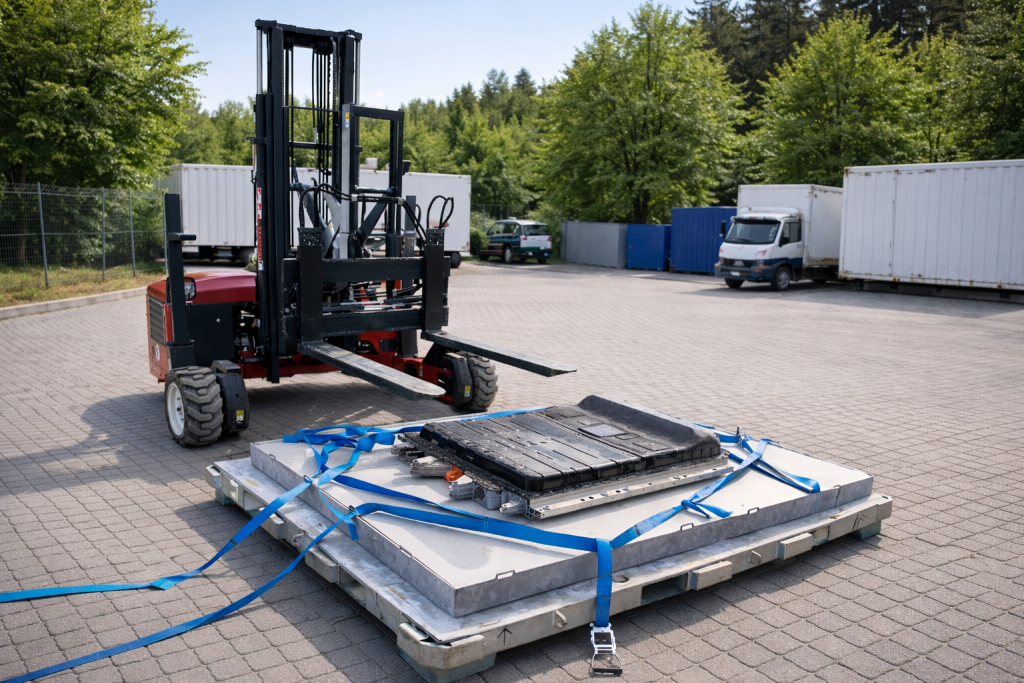
The image shows a critically defective battery on the base pallet of our safety box, being professionally prepared by our team for safe transport in full compliance with all legal requirements.
This is exactly where it is decided whether a shipment is carried out safely – or becomes a serious risk.
Damaged lithium batteries do not belong in standard transport. They require certified special packaging, clearly defined processes, and trained personnel who understand the risks and know how to manage them correctly.
A safe transport solution begins long before the truck starts moving. It starts with the right assessment of the battery condition, the correct packaging concept, proper securing, compliant documentation, and a team that knows exactly what must be done at every step.
When dealing with defective or critical lithium batteries, there is no room for improvisation. Small mistakes in preparation can lead to major consequences during handling, storage, or transit. That is why every detail matters.
Safety begins with the right packaging.
But it also depends on experience, responsibility, and operational discipline.
For companies handling damaged or defective batteries, choosing the right logistics setup is not just a compliance issue — it is a key part of risk prevention.